Ad

Ad

Progress for group 0 ad

Daniel Metaferiya
Addis Ababa, Ethiopia
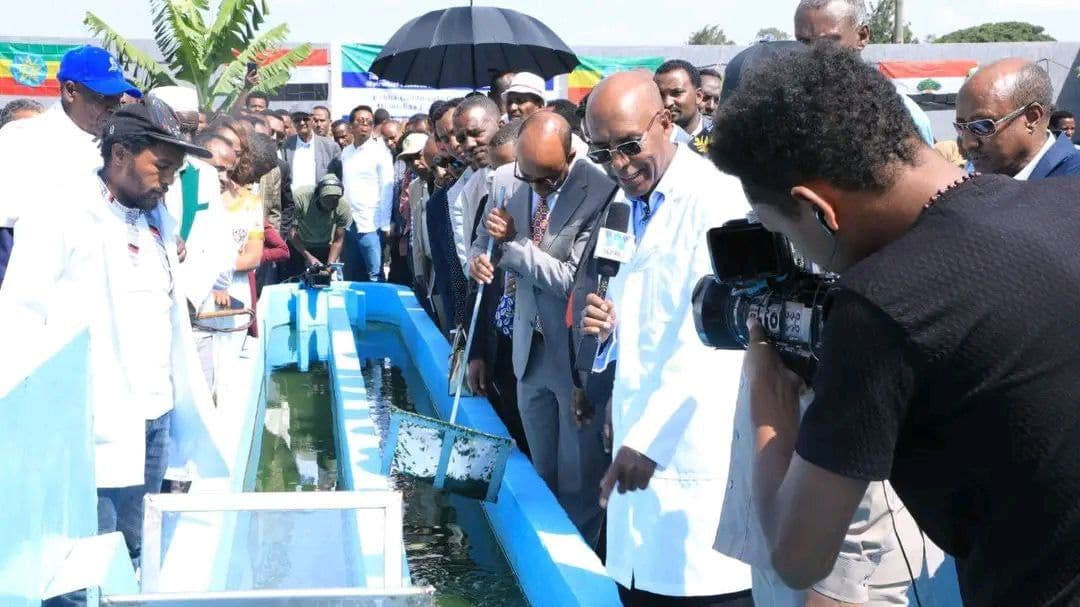
Culminating a three-year development effort, the Ethiopian Bio and Emerging Technology Institute in collaboration with the Ministry of Innovation and Technology and the Oromia Agricultural Research Institute, launches the nation’s first microalgae (spirulina) research and production center.


Built at the Adami Tulu Agriculture Center with an investment of 8.2 million birr, Ethiopia’s new spirulina research and production facility spans 1,200 square meters and has already produced its first batch of spirulina exceeding 30 kg per month.
This initial success lays the groundwork for future scaling of production, according to Firew Tafesse (PhD), senior researcher at the institute.


The center, inaugurated on June 20, 2024, enables Ethiopia to produce the algae on a large scale. Spirulina sells for a high price, fetching 20,000 birr per kilogram and up to 2 million birr per quintal.
“We’ve successfully produced the first pilot batch of spirulina,” he told Shega. “This will help reduce reliance on imported spirulina, a nutrient-rich product with significant market value.”
According to Firew, Spirulina is a type of blue-green algae that contains more than 90 percent of the nutrients needed by humans and is the only microalgae in the world that contains all five nutrients in a single cell. It contains more than 60 percent protein, vitamins, fat, minerals, and carbohydrates.
A key advantage of spirulina production is its rapid growth cycle. Unlike traditional crops requiring months or years to mature, spirulina can be harvested every 24 hours after initial production. “This translates to a sustainable and efficient way to produce this valuable superfood.” Said Firew.
Previously, Ethiopia relied heavily on imported spirulina from India, China, and Europe, with prices reaching a staggering 63,000 birr per kilogram. This new domestic production initiative aims to break free from this dependence and potentially become a future exporter.
Founded in 2016 the Bio and Emerging Technology Institute is a research institute owned and operated by the Ethiopian government.
Share this post:

Daniel Metaferiya
Jane Doe is an accomplished writer and storyteller with a passion for exploring the intricacies of human relationships. She holds a Master’s degree in Creative Writing from the University of Fiction and has published several novels and short stories in various literary magazines. When she's not writing, Jane enjoys hiking in the mountains, experimenting with new recipes in her kitchen, and volunteering at her local animal shelter. Her work often reflects her love for nature and her commitment to social issues. Jane lives in Seattle with her two rescue dogs, Max and Bella. You can find her online at www.janedoeauthor.com and on social media @JaneDoeWrites.
At Shega, we do more than tell stories. We help you make an impact. Our platforms, data, and expertise connect brands, organizations, and investors to the audiences and insights that matter.
Reach, engage, and grow with us.
Get in Touch
Insights into the Personal Data Protection Proclamation
02 September 2024

Yango Hits 1 Million Users in Ethiopia test
31 August 2024

Ethiopia’s Delicate Dance with Personal Data Protection
24 August 2024
Latest Stories
25 February 2026
𝗖𝘂𝗽𝗶𝗱’𝘀 𝗖𝘂𝗿𝗿𝗲𝗻𝗰𝘆: 𝗚𝗹𝗼𝗯𝗮𝗹 𝗧𝗿𝗮𝗱𝗲 𝗦𝗵𝗮𝗽𝗲𝘀 𝗔𝗱𝗱𝗶𝘀 𝗔𝗯𝗮𝗯𝗮’𝘀 𝗩𝗮𝗹𝗲𝗻𝘁𝗶𝗻𝗲’𝘀 𝗗𝗮𝘆 𝗥𝗼𝘀𝗲𝘀
By Bethel TesfayeLatest Stories
𝗖𝘂𝗽𝗶𝗱’𝘀 𝗖𝘂𝗿𝗿𝗲𝗻𝗰𝘆: 𝗚𝗹𝗼𝗯𝗮𝗹 𝗧𝗿𝗮𝗱𝗲 𝗦𝗵𝗮𝗽𝗲𝘀 𝗔𝗱𝗱𝗶𝘀 𝗔𝗯𝗮𝗯𝗮’𝘀 𝗩𝗮𝗹𝗲𝗻𝘁𝗶𝗻𝗲’𝘀 𝗗𝗮𝘆 𝗥𝗼𝘀𝗲𝘀
25 February 2026


Insights into the Personal Data Protection Proclamation
02 September 2024
Yango Hits 1 Million Users in Ethiopia test
31 August 2024
Ethiopia’s Delicate Dance with Personal Data Protection
24 August 2024