Ad

Ad

Progress for group 0 ad
Munir Shemsu
Addis Ababa, Ethiopia
Jamii.One is tapping into traditional Edir institutions to deliver microinsurance to the financially underserved. With an impressive 1 million people onboard, this insurtech startup is bringing financial protection to those who need it most.


____
A Danish-Ethiopian insuretech collaboration is leveraging a centuries-old Ethiopian community tradition to reach millions in financially excluded areas. Jamii.One is utilizing ‘Edir’, a communal funding arrangement where members pitch in small amounts periodically to access funds in times of tragedy, with novel microinsurance services.


Initially founded by a trio of ambitious innovators aiming to provide microloan services to financially excluded groups, the company morphed in response to community feedback.
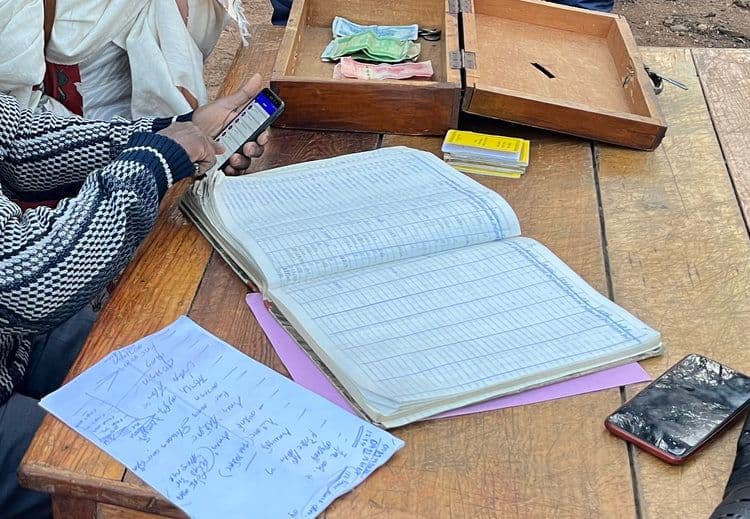
After working with Edirs nationwide to understand and organize their data registration, bookkeeping, and management practices, Jamii has managed the settlement of around 90 million birr in 900 claims from groups located in all corners of the country through Nib Insurance. It has also facilitated access to insurance services for nearly 160,000. Just recently, the startup managed to onboard an impressive 1 million people.
One of these beneficiaries is Assefa Nega (Maj), chairman of the Jaja 47 General Association in Nifas Silk Laphto District, Addis Ababa. He recalls Layla, one of the promoters of Jamii, approaching him three years ago with what seemed like some bureaucratic government scheme.
“I did not think it would turn out so well for us,” the former soldier told Shega.
Assefa is proud to have participated in a process that provided life insurance coverage to the 568 households within the six-decade-old Association. He says all the 25 families who received claim settlements of 100,000 birr through Jamii escaped imminent financial turmoil.
“Most would have never seen that much money throughout their lifetime,” said Assefa proudly.
Jamii, which translates to community in Swahili, has developed an application available in four local languages operating with an easily manageable interface.
Tigist Bezu, General Manager and Founding Partner, says tailoring the design of the service to the real needs of communities through a bottom-up approach helped in identifying the precise nature of the demand. She emphasizes that their service does not apply to the age, health, or other requirements applied by large insurance companies that often exclude people from qualifying for an insurance product.
“All members of a registered group can qualify,” Tigist told Shega.
She referred to the 85pc retention rate of the company for people who use the service as a demonstration of the deeply embedded demand for insurance products.
Ethiopia has one of the smallest insurance penetration rates in the world, with less than 1pc of the over 120 million citizens being insured. While 18 insurance companies operate in Ethiopia with assets close to 40 billion birr last year, over half of the coverage is either for motor or maritime insurance.
“The figures are quite alarming,” Tigist says.
She recalled initial struggles to find an insurer willing to work with Jamii early on due to the novelty of the product until managing to partner with the two-decade-old Nib Insurance.
The country manager attributes part of the company’s success to the expansion of network coverage, which has made remote areas of the country accessible. As the company aims to reach 40 million people, Tigist notes that this growth in mobile coverage over the past five years has been crucial. She adds that reaching such a vast network, potentially serving tens of millions of individuals, would be unthinkable without technology
Jamii offers life insurance packages ranging from a little over 1,130 birr premiums annually per person, while it settles claims to the tune of 100,000 birr. The startup charges the insurance company a data fee and a percentage of the annual premium for each month or year that users remain with the provider
“Absorbing the financial shock during a time of need is the main goal,” Tigist explained.
A single member of an Edir armed with a smartphone and a pinch of digital literacy can use the mobile application to onboard and expand coverage.
While Edirs traditionally offer financial assistance to members to cover funeral expenses, Jamii seeks to offer a cushion to households missing out on their income due to a loved one’s passing. The company is applying data and telecommunications technology to harness the potential of the existing communal arrangement.
Insurtech is gaining increased attention in Ethiopia, with several startups working to digitize traditional institutions like Edir and Equb, peer-to-peer savings groups. Recently, eQub, a fintech startup digitizing Equb, and HuluCares, a startup focused on providing community-based Idir insurance, were selected for the inaugural Timbuktoo Fintech Startup Accelerator Program.
These two startups were chosen from among 817 applicants across Africa. A total of 42 startups from 31 countries were selected to participate in the program in Lagos, Nigeria.
In addition, BimaLab Ethiopia, implemented by FSD Ethiopia with funding from the Bill & Melinda Gates Foundation, in collaboration with FSD Africa and the National Bank of Ethiopia, is working to empower insurtechs and tackle the distinctive challenges confronted by the Ethiopian insurance sector.
Solomon Bogale, manager of the Nib Amba Edir Association, has observed a massive sense of relief in the 387 members who benefit from Jamii’s package. The 35-year-old association, comprised of residents in Woreda 6 of the Akaki Qaliti District in Addis Ababa, has facilitated support for 10 members.
“The sense of confusion after the loss of a loved one is massively reduced through the packages,” Solomon told Shega.
He says they are preparing to renew the arrangement with Jamii for the fourth time in the coming few months after recognizing the gains with just one- or two-Birr premiums paid out daily. Solomon explained how they collect the premiums throughout the year to limit the financial burden that may accrue from a single, one-time payment.
“We adhere to meticulous bookkeeping procedures,” he says.
Share this post:
Munir Shemsu
At Shega, we do more than tell stories. We help you make an impact. Our platforms, data, and expertise connect brands, organizations, and investors to the audiences and insights that matter.
Reach, engage, and grow with us.
Get in Touch
Insights into the Personal Data Protection Proclamation
02 September 2024

Yango Hits 1 Million Users in Ethiopia test
31 August 2024
Can AliExpress Unlock Ethiopia’s E-Commerce Potential?
25 August 2024

Ethiopia’s Delicate Dance with Personal Data Protection
24 August 2024
Latest Stories
25 February 2026
𝗖𝘂𝗽𝗶𝗱’𝘀 𝗖𝘂𝗿𝗿𝗲𝗻𝗰𝘆: 𝗚𝗹𝗼𝗯𝗮𝗹 𝗧𝗿𝗮𝗱𝗲 𝗦𝗵𝗮𝗽𝗲𝘀 𝗔𝗱𝗱𝗶𝘀 𝗔𝗯𝗮𝗯𝗮’𝘀 𝗩𝗮𝗹𝗲𝗻𝘁𝗶𝗻𝗲’𝘀 𝗗𝗮𝘆 𝗥𝗼𝘀𝗲𝘀
By Bethel TesfayeLatest Stories
𝗖𝘂𝗽𝗶𝗱’𝘀 𝗖𝘂𝗿𝗿𝗲𝗻𝗰𝘆: 𝗚𝗹𝗼𝗯𝗮𝗹 𝗧𝗿𝗮𝗱𝗲 𝗦𝗵𝗮𝗽𝗲𝘀 𝗔𝗱𝗱𝗶𝘀 𝗔𝗯𝗮𝗯𝗮’𝘀 𝗩𝗮𝗹𝗲𝗻𝘁𝗶𝗻𝗲’𝘀 𝗗𝗮𝘆 𝗥𝗼𝘀𝗲𝘀
25 February 2026


Insights into the Personal Data Protection Proclamation
02 September 2024
Yango Hits 1 Million Users in Ethiopia test
31 August 2024
Can AliExpress Unlock Ethiopia’s E-Commerce Potential?
25 August 2024
Ethiopia’s Delicate Dance with Personal Data Protection
24 August 2024