Ad

Ad

Progress for group 0 ad
Lydia Berhanu
Addis Ababa, Ethiopia
During a briefing to the Standing Committee on Urban Development and Transport Affairs of the parliament on January 31, 2024, the Minister of Transport and Logistics presented the ministry’s six-month report.


As part of the presentation, the minister highlighted a study proposing restrictions on private vehicles during peak commuting hours to open roads for smoother traffic flow.
The Minister argued that this new system will positively impact streamlining traffic flow, reducing fuel consumption resulting from road closures, and mitigating climate pollution.


The announcement has sparked a heated discussion in the transportation industry. Many individuals have turned to social media to voice their opinions on the matter, with the majority opposing the proposal and expressing concerns about the potential challenges and consequences if the government proceeds with the study.
Since the first car was introduced in Ethiopia, the population has witnessed an exponential thirteen-fold increase. This demographic surge is particularly pronounced in Addis Ababa, the capital city, owing to a radical increase in urbanization. Currently, Addis is home to an estimated 5.7 million people, resulting in a notable population density.
According to a report by the Federal Transport Authority in September 2020, there were 630,000 registered cars in Addis, accounting for 53% of the nationally registered cars.
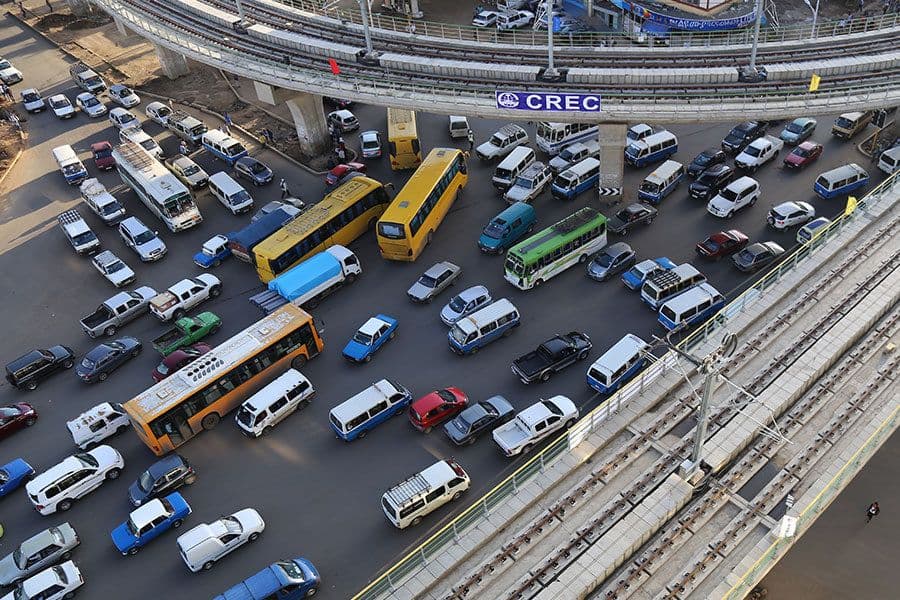
The rapid increase in the city’s population and vehicle ownership, combined with other factors, is exacerbating traffic congestion. During peak entry and exit hours of work, the traffic flow becomes very congested, and these days, witnessing very long lines of cars and people in queues waiting for public transport (shared taxis and buses) here and there is becoming an unfortunate norm.
And the mismatch between the road infrastructure and the demand, coupled with the non-modernized traffic management system, has aggravated the issue.
A study conducted in 2021 to assess road traffic congestion and its impact involved data collection at Yeka sub-city’s major intersections, which are among the top traffic-congested corridors in Addis.
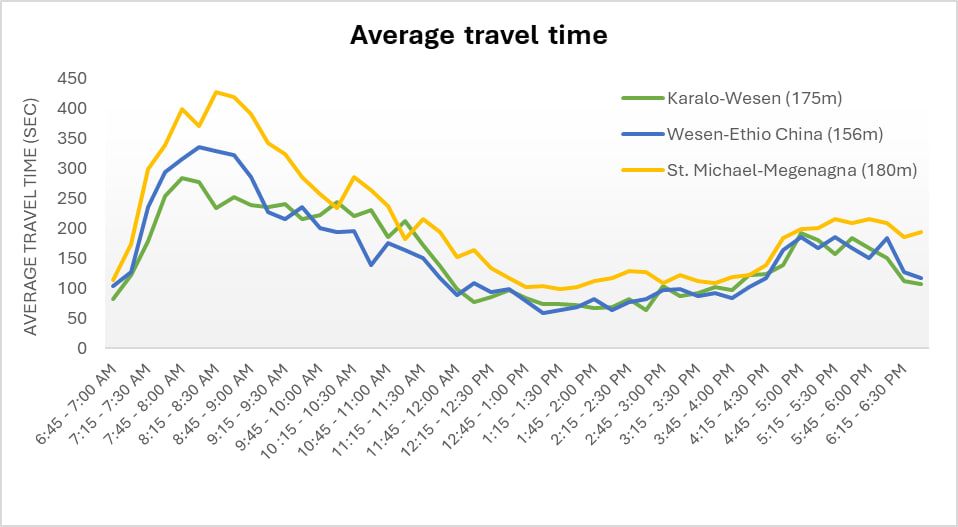
As depicted in the chart above, even a mere 15-minute deviation in departure time in Addis can significantly impact overall travel time. To ensure punctuality, particularly for work or school during the five working days, individuals are compelled to leave their homes earlier than they would under normal circumstances.
Interestingly, the problem appears more pronounced at the start of the week and gradually diminishes thereafter.
In my view, while the initiative to limit private cars during peak commuting hours offers long-term benefits by enhancing traffic flow for the general public, several solutions could be implemented before opting for a complete ban.
Currently, the city’s buses and other public transportation options are insufficient to accommodate existing commuters, let alone private car users. Therefore, to promote public transportation usage, the government should ensure its availability and proper distribution.
Instead of restricting private car movement during peak hours, a more feasible solution is to establish alternative routes. This would allow the main route to prioritize public transportation during those hours, or designate dedicated lanes for public transport. Additionally, the government should focus on improving road infrastructure, including maintenance.
Related- Fuel Price Hikes Put Ride-hailing Sector in Trouble, Time to Re-innovate the Business Model
Implementing mechanisms such as charging for road usage during peak hours in congested areas could also be effective, as seen in London (Congestion Charge) and Singapore (Electronic Road Pricing), which led to reduced road traffic, increased average road speed, and higher public transport usage.
Encouraging employers to adopt flexible work policies, such as remote work or staggered work hours, can further alleviate peak-hour congestion and promote off-peak public transport usage.
Moreover, before fully implementing the initiative citywide, the government should conduct a trial in highly affected areas, like Summit-Bole, Summit-Megenagna, Megenagna-Mexico roads for a specific period.
__________
Share this post:
Lydia Berhanu
At Shega, we do more than tell stories. We help you make an impact. Our platforms, data, and expertise connect brands, organizations, and investors to the audiences and insights that matter.
Reach, engage, and grow with us.
Get in Touch
Insights into the Personal Data Protection Proclamation
02 September 2024
Latest Stories
25 February 2026
𝗖𝘂𝗽𝗶𝗱’𝘀 𝗖𝘂𝗿𝗿𝗲𝗻𝗰𝘆: 𝗚𝗹𝗼𝗯𝗮𝗹 𝗧𝗿𝗮𝗱𝗲 𝗦𝗵𝗮𝗽𝗲𝘀 𝗔𝗱𝗱𝗶𝘀 𝗔𝗯𝗮𝗯𝗮’𝘀 𝗩𝗮𝗹𝗲𝗻𝘁𝗶𝗻𝗲’𝘀 𝗗𝗮𝘆 𝗥𝗼𝘀𝗲𝘀
By Bethel TesfayeLatest Stories
𝗖𝘂𝗽𝗶𝗱’𝘀 𝗖𝘂𝗿𝗿𝗲𝗻𝗰𝘆: 𝗚𝗹𝗼𝗯𝗮𝗹 𝗧𝗿𝗮𝗱𝗲 𝗦𝗵𝗮𝗽𝗲𝘀 𝗔𝗱𝗱𝗶𝘀 𝗔𝗯𝗮𝗯𝗮’𝘀 𝗩𝗮𝗹𝗲𝗻𝘁𝗶𝗻𝗲’𝘀 𝗗𝗮𝘆 𝗥𝗼𝘀𝗲𝘀
25 February 2026


Insights into the Personal Data Protection Proclamation
02 September 2024