Ad

Ad

Progress for group 0 ad
Kaleab Girma
Addis Ababa, Ethiopia
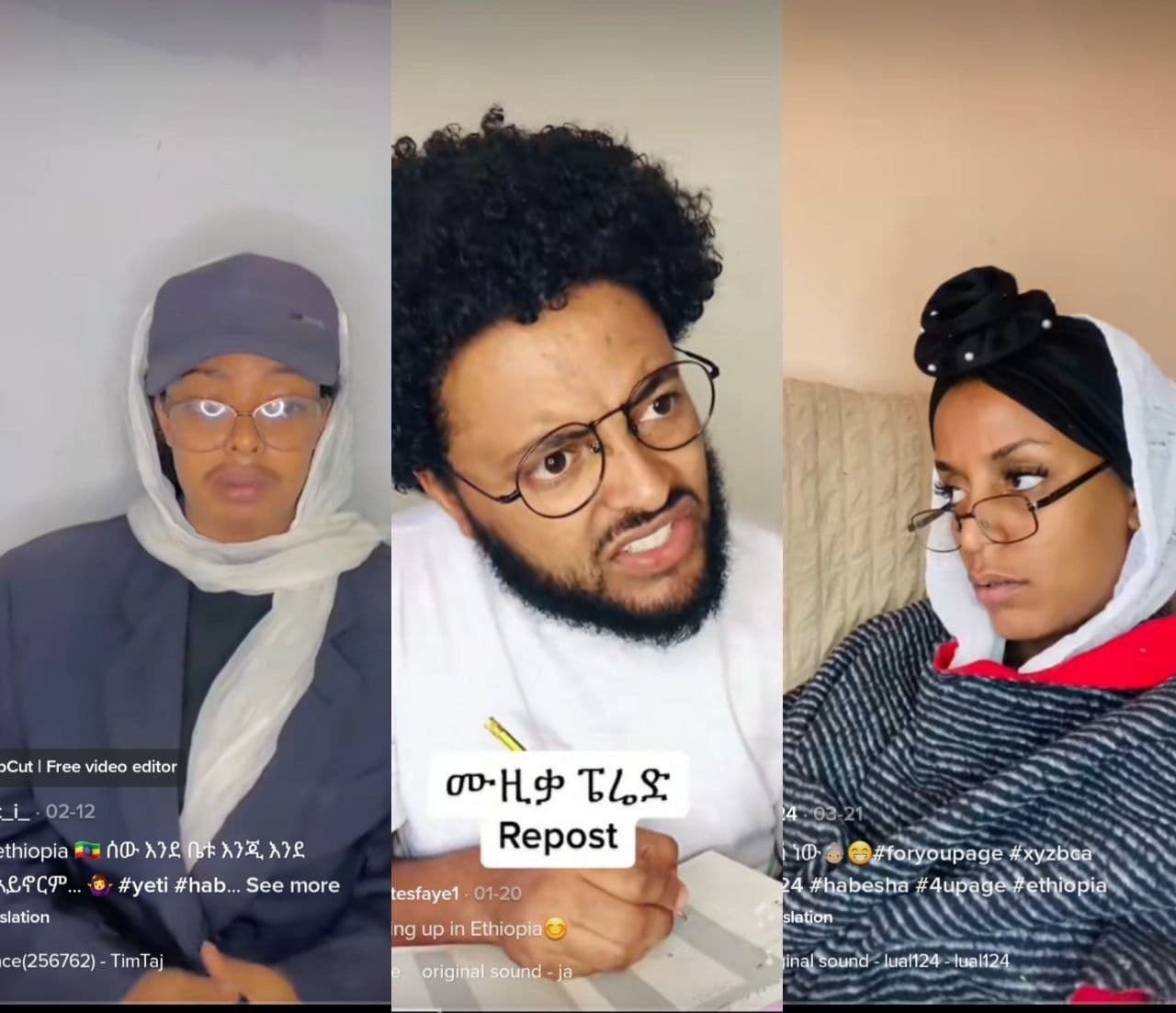
Jara Tesfaye is an Ethiopian content creator who often takes his followers back to childhood memories highlighting both the good and bad times on the global video-sharing app TikTok.


With voice-over effects and minimal wardrobe play, the 30-year-old uses humor to dig out stuff from the memory bag. He plays all the characters in his videos, depicting various interactions of a child with parents, teachers or other children.
“My very first video went viral within just three days. That was a clear sign that there was a need for such content,” said Jara, who joined TikTok at the end of last year.


Being insulted by adults, teachers failing to attend to the needs of students, and corporal punishment are some of the ideas his videos revolve around.
Jara’s videos are part of a new trend in the Ethiopian social media landscape that has seen the rise of young social commenters on TikTok that use humor to address real-life topics from growing up in Ethiopia. Mirroring the reality of Ethiopian upbringing, these TikTokers are speaking to the young population, earning millions of views and thousands of followers.
“Before I started making the videos I didn’t like the type of humor that was going around on social media platforms at that time. Often jokes were told at the expense of certain groups based on ethnicity, politics or gender. It was divisive, and I wanted to bring something positive and relatable,” said Jara.
“That’s when I realized I had all this material from my childhood,” added Jara, who has 170,000 followers on the social media platform owned by the Chinese company ByteDance.
Through acted-out sketch comedy, these new faces of Ethiopian influencers like Jara bring both current and past social issues to light. Often with humor lying in the depicted situation being real but ridiculous, they are also helping Ethiopia’s youth revisit their memories and heal what may have been hurt through laughter.
“Most of the dialogue from my videos did happen in real life. From the beating to the insults, they were bad memories that had stayed with me,” said Jara.
The TikToker says his travails during an Ethiopian upbringing are not unique to him.
“Growing up, I reflected on these issues on my own. But with platforms like TikTok, I am connecting with thousands of people who share my experience, recalling these memories and laughing together,” added Jara, who is a law graduate.
Lual Terefe, with 321,000 followers, and Yetnyate Taye, with 366,000 followers, are other content creators on the platform that are similarly known for their imitation of Ethiopian parents.
25-year-old Yetnayet, who goes by the user name y_e_t_i, often pokes her followers with humor from the gender perspective.
“I am not an activist nor a leader. I am a content creator, and my medium is comedy. I use these platforms to tackle what is real,” Yetnyaet told Shega.
In some of her videos, she shows parents’ differential treatment of sons and daughters when it comes to going out, talking on the phone and asking for money, with daughters often having fewer privileges because of the perceived greater danger to them.
“Raising daughters like this has negative consequences in which these daughters could possibly grow up with the feeling that they always need protection from others, not letting them be truly independent,” states Yetnayet, who says parents watch her work too.
Though her content does not reflect her upbringing, she notes her work results from what she saw in her community.
The videos of these three content creators have been jointly watched over 100 million times and provide a type of content users like Edom Belay log in to the platform for.
The 22-year-old student says she easily sees her life in these videos, and they capture what her upbringing was like.
“I see myself and family in these videos. It feels great to watch such content and relate with others,” added Edom.
Ethiopia’s ascendence in the age of influencers doesn’t have a long history. But since its first emergence, it has quickly grown far and wide. Expensive photo shoots, designer outfits, exotic travels and lavish backgrounds were the theme of early social media influencers in Ethiopia.
“Even though people gave their attention to these people, there was dislike too. Many felt the lifestyle pushed by the early influencers was detached from the reality in Ethiopia,” says Sitra Abubaker, cofounder at Social.ly, a digital marketing agency in Ethiopia that works with influencers.
“In addition, these early influencers could hardly be called content creators. There was no content. They just showcased their life on social media and earned the mass likes,” added Sitra.
But as time grew, so did the landscape. Diverse and creative content creators came to the scene with unique content. As Khabane Lame, the Senegalese-born social media personality known for his TikTok videos in which he mocks overly complicated life hack videos, spoke to millions of people without saying a word, these content creators are finding their audience too.
Nowadays, it’s common to find sketch videos that comically point out the “silly” aspects of the Ethiopian parental upbringing on TikTok, which has over one billion global active users. While their acting, funny facial expressions and script put the comic in their works, most of the situations they portray in their videos are realities that most Ethiopians relate to.
These new frank content creators make their videos out of their families’ homes, that’s familiar to many Ethiopians. Making videos wearing old clothes, with no attempt to hide the background of their homes, gives their fans an authentic feeling to their work.
Nosy neighbors, dramatic aunties, parents’ continuous disapproval of their kids, corporal punishment, sibling rivalry, parental preferential treatment and fighting over scarce resources are the theme of these content creators.
Seble Hailu, a psychologist in Ethiopia, says these TikTokers address societal generational gaps in humorous ways and express the pain adults cause raising children without realizing how their words and actions hurt.
In a country where social media penetration sits at 5.3pc with a median age of 19.5, the fact that these social commentators have risen to prominence on social media is no surprise as young people mostly use these platforms.
These TikTok trends are happening in Ethiopia at the same time the global giant is under scrutiny for alleged harmful effects on young user
Share this post:
Kaleab Girma
At Shega, we do more than tell stories. We help you make an impact. Our platforms, data, and expertise connect brands, organizations, and investors to the audiences and insights that matter.
Reach, engage, and grow with us.
Get in Touch
Insights into the Personal Data Protection Proclamation
02 September 2024

Yango Hits 1 Million Users in Ethiopia test
31 August 2024
Can AliExpress Unlock Ethiopia’s E-Commerce Potential?
25 August 2024

Ethiopia’s Delicate Dance with Personal Data Protection
24 August 2024
Ethiopian Tradition Sparks Insurance Revolution
17 August 2024
Latest Stories
25 February 2026
𝗖𝘂𝗽𝗶𝗱’𝘀 𝗖𝘂𝗿𝗿𝗲𝗻𝗰𝘆: 𝗚𝗹𝗼𝗯𝗮𝗹 𝗧𝗿𝗮𝗱𝗲 𝗦𝗵𝗮𝗽𝗲𝘀 𝗔𝗱𝗱𝗶𝘀 𝗔𝗯𝗮𝗯𝗮’𝘀 𝗩𝗮𝗹𝗲𝗻𝘁𝗶𝗻𝗲’𝘀 𝗗𝗮𝘆 𝗥𝗼𝘀𝗲𝘀
By Bethel TesfayeLatest Stories
𝗖𝘂𝗽𝗶𝗱’𝘀 𝗖𝘂𝗿𝗿𝗲𝗻𝗰𝘆: 𝗚𝗹𝗼𝗯𝗮𝗹 𝗧𝗿𝗮𝗱𝗲 𝗦𝗵𝗮𝗽𝗲𝘀 𝗔𝗱𝗱𝗶𝘀 𝗔𝗯𝗮𝗯𝗮’𝘀 𝗩𝗮𝗹𝗲𝗻𝘁𝗶𝗻𝗲’𝘀 𝗗𝗮𝘆 𝗥𝗼𝘀𝗲𝘀
25 February 2026


Insights into the Personal Data Protection Proclamation
02 September 2024
Yango Hits 1 Million Users in Ethiopia test
31 August 2024
Can AliExpress Unlock Ethiopia’s E-Commerce Potential?
25 August 2024
Ethiopia’s Delicate Dance with Personal Data Protection
24 August 2024
Ethiopian Tradition Sparks Insurance Revolution
17 August 2024