Ad

Ad

Progress for group 0 ad
Munir Shemsu
Addis Ababa, Ethiopia
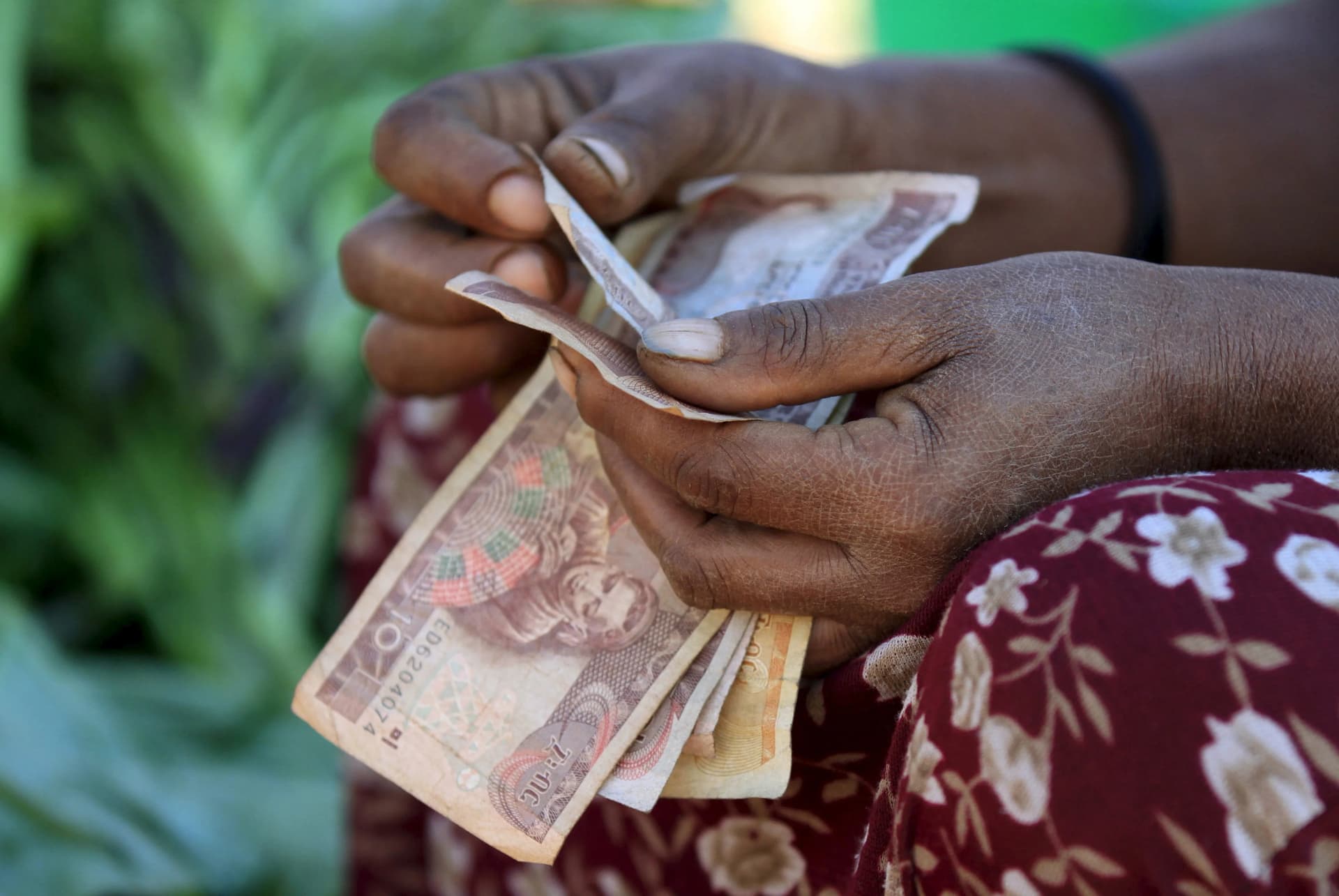
Ethiopia underwent a seismic financial transformation over the past week, floating the Birr after nearly five decades of captivity. The monetary upheaval cosigned by multinational financiers like the International Monetary Fund (IMF) and the World Bank resulted in a week of panic as the Birr plunged by nearly 80pc from around 57 birr against the dollar to above 100 in some commercial banks.


Every player across the economic ladder, from the street vendor retailing paltry pieces of imported commodities to the stewards of the banking industry located in the capital’s financial district, is adjusting to the new norm. Finance Minister Ahmed Shide assured parliamentarians gathered for an urgent meeting to approve a 500-million-dollar credit line late Wednesday that the short-term spike in prices would mean little compared to the benefits of macroeconomic stability in the long run.
“A chaotic response early on is expected,” he said.


A formidable financial buffer buttressed by what is reportedly around 20 billion dollars over four years from a mix of credit line grants extended by the IMF, World Bank, and International Finance Corporation, among others, looks to safeguard Ethiopians from the harshest of blows arising from the fallout.
Prime Minister Abiy Ahmed (PhD) pointed out that Ethiopia’s imports have primarily relied on parallel foreign currency markets, characterizing the floating of the Birr as a unification of markets more than anything else.
“Only fertilizer and fuel are imported at official rates,” the PM underscored.
Abiy acknowledged the potential difficulties stemming from the currency shakeup while relegating them to a small cost in lieu of the enormous economic benefits in the long run when addressing the nation a day after the finance minister spoke at parliament.
Amid the panoply of traditional financial players, there is an ecosystem of up-and-coming firms that could leverage the floated Birr to enhance their products and services.
Vince Mountaga Diop, CEO of Belcash, the company that launched one of the first digital remittance platforms in Ethiopia through MamaPays, is excited over the possibilities under a liberalized foreign currency regime. He indicated that the company immediately set out to improve its service, which charges a dollar per transaction in a manner that quickly responds to market rates.
“We can only follow the banks,” Vince told Shega.
The CEO also revealed the ongoing development of a Pan African unified trade wallet by the company, which will allow merchants to engage suppliers through a top-up modality. Vince expects future integrations with the Pan-African Payment and Settlement System (PAPSS) to allow trade between merchants in Kenya, Ghana, and Ethiopia through wallets.
“These prospects can only be enhanced via liberalization,” he says.
This sentiment was echoed by Prime Minister Abiy, who expressed a lack of logical coherence in being a signatory to the African Continental Free Trade Area (AfCFTA) while remaining closed off to the international financial ecosystem. He cited the prospects to the bank executives, ministers, and senior government officials gathered during a seminal address last Thursday, explicating the implications of the new landscape.
Vince recognizes courage in the overall liberalization undertaken by the government, factoring in the possible attraction of increased investment, competition in financial services provision, and incentives for innovative products.
“What is clear is the status quo is not sustainable,” he says, “like most things in Africa.”
While a myriad of insights and expectations have been offered by pundits about the prospects of the Ethiopian economic landscape due to the liberalization, a sharp foreign crunch has been just one of the issues in the overall macroeconomic instability.
The National Bank of Ethiopia’s three-year strategic plan released in December, which targets raising the foreign currency reserves from just two and a half weeks’ worth of imports to enough for over two months, intimates the depth of the issue. The plan outlining a comprehensive overhaul of the economic infrastructure with 21 action plans towards international best practices of central banking also includes joining cross-border payment systems.
Recent shifts are emblematic of the pending changes.
Solomon Damtew, Head of the Payment & Settlement Directorate at NBE, echoes a similar sentiment of expanding cross-border settlement opportunities under the liberalized regime policy. He recalled an element of the recent agreement with the United Arab Emirates (UAE) and Ethiopian central bank for a currency swap that allows the interlinking of their instant payment systems, national card switches UAESWITCH and ETHSWITCH, and messaging systems in accordance with the regulatory requirements of each country.
“Similar bilateral and multilateral arrangements are in the pipeline,” Solomon told Shega.
He pointed out that most cross-border settlement arrangements come about from interactions either between switch operators or central banks.
“The change creates a good opportunity nonetheless,” Solomon says.
NBE released a cascade of directives and guidelines in the week that set up the regulatory framework and possible modalities of engagement for prospective actors in the updated currency ecosystem. The service industry, which accounted for 29.5pc of the 24 billion dollars foreign currency earnings two years ago, plays a crucial role in Ethiopia’s forex generation.
Yaya Wallet, a payment instrument issuer that received NBE’s approval last year, is already targeting the incorporation of foreign currency accounts into its portfolio of businesses.
Muluken Alemu, Customer Operations Director at the company, foresees an array of potential avenues of entry for startups through the unshackled foreign currency regime. He expects a number of businesses to emerge utilizing the international inward remittance option that could debut via the wallet.
“A bunch of new doors just opened for the digital financial ecosystem,” Muluken told Shega.
He also indicated the prospects of numerous benefits for Ethiopia’s export economy as surrender requirements are removed by the central bank through the new regime. The director says the positives for the economy as a whole will outweigh the inflationary threats as long as the government manages to ensure relative price stability.
While double-digit inflation rates have been a defining feature of the Ethiopian economy in the past few years, a mix of austerity and monetary tightening has pulled down the figure by nearly 7pc to 23 in the year. Fears of galloping inflation for a country with nearly a 14-billion-dollar trade deficit have dominated the economic narrative around the floating of the Birr. Domestic commodity markets have
Share this post:
Munir Shemsu
At Shega, we do more than tell stories. We help you make an impact. Our platforms, data, and expertise connect brands, organizations, and investors to the audiences and insights that matter.
Reach, engage, and grow with us.
Get in Touch
Insights into the Personal Data Protection Proclamation
02 September 2024

Yango Hits 1 Million Users in Ethiopia test
31 August 2024
Can AliExpress Unlock Ethiopia’s E-Commerce Potential?
25 August 2024

Ethiopia’s Delicate Dance with Personal Data Protection
24 August 2024
Ethiopian Tradition Sparks Insurance Revolution
17 August 2024
Latest Stories
25 February 2026
𝗖𝘂𝗽𝗶𝗱’𝘀 𝗖𝘂𝗿𝗿𝗲𝗻𝗰𝘆: 𝗚𝗹𝗼𝗯𝗮𝗹 𝗧𝗿𝗮𝗱𝗲 𝗦𝗵𝗮𝗽𝗲𝘀 𝗔𝗱𝗱𝗶𝘀 𝗔𝗯𝗮𝗯𝗮’𝘀 𝗩𝗮𝗹𝗲𝗻𝘁𝗶𝗻𝗲’𝘀 𝗗𝗮𝘆 𝗥𝗼𝘀𝗲𝘀
By Bethel TesfayeLatest Stories
𝗖𝘂𝗽𝗶𝗱’𝘀 𝗖𝘂𝗿𝗿𝗲𝗻𝗰𝘆: 𝗚𝗹𝗼𝗯𝗮𝗹 𝗧𝗿𝗮𝗱𝗲 𝗦𝗵𝗮𝗽𝗲𝘀 𝗔𝗱𝗱𝗶𝘀 𝗔𝗯𝗮𝗯𝗮’𝘀 𝗩𝗮𝗹𝗲𝗻𝘁𝗶𝗻𝗲’𝘀 𝗗𝗮𝘆 𝗥𝗼𝘀𝗲𝘀
25 February 2026


Insights into the Personal Data Protection Proclamation
02 September 2024
Yango Hits 1 Million Users in Ethiopia test
31 August 2024
Can AliExpress Unlock Ethiopia’s E-Commerce Potential?
25 August 2024
Ethiopia’s Delicate Dance with Personal Data Protection
24 August 2024
Ethiopian Tradition Sparks Insurance Revolution
17 August 2024