Ad

Ad

Progress for group 0 ad
Tewodros Tassew
Addis Ababa, Ethiopia
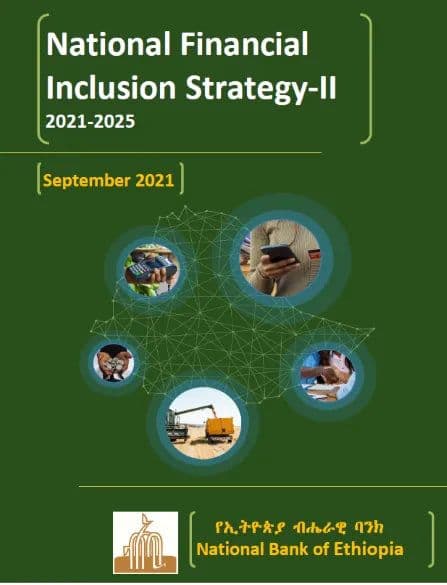
The National Bank of Ethiopia has updated Ethiopia’s National Financial Inclusion Strategy, which was developed in 2021. While the official review and circulation to the public occurred recently, the refreshed strategy had been in development for several months.


To ensure maximum dissemination of knowledge and to cater to the interest of stakeholders, Fintech Consultant Tewodros Tassew has prepared a summary of the background, objectives, and targets of Ethiopia’s renewed financial inclusion strategy. While it is recommended that stakeholders working in the financial sector read the full strategy document, the following key takeaways offer an overview.
Financial inclusion plays a vital role in ensuring that individuals and businesses have access to affordable financial products and services. In 2016, Ethiopia, acknowledging the significance of financial inclusion, developed a National Financial Inclusion Strategy (NFIS), with the implementation period ending in 2020.


Considering the emergence of new opportunities and changes within the financial sector, as well as the Homegrown Economic Reform Agenda, the National Financial Inclusion Strategy has been updated for the period of 2021–2025.
The primary reasons for this update include the rise of novel opportunities and enablers in the financial sector, the Homegrown Economic Reform Agenda, and the completion of most actions outlined in the 2016 Strategy. According to the document, the first financial inclusion strategy (NFIS-1) has achieved notable milestones, such as the amendment of Banking and Insurance Business Proclamations, the issuance of a new proclamation for movable property security rights, and the development of the National Digital Payment Strategy.
Over the last five years, Ethiopia has made significant strides in broadening the reach of transaction accounts, enhancing access to formal banking services, expanding bank branches and agent networks, increasing the digital finance presence, growing mobile money accounts, and encouraging savings within formal financial institutions.
According to the National Bank of Ethiopia, the percentage of the adult population having a bank account has reached ~45% as of 2020. This substantial increase, from 22% in 2014 and 35% in 2017, falls short of the National Financial Inclusion Strategy’s target to achieve 60% by 2020.
The updated National Financial Inclusion Strategy seeks to build upon the successes of the 2016 Strategy and harness new opportunities to further enhance financial inclusion in Ethiopia. It envisions fostering a financially inclusive Ethiopia, ensuring that no one is left behind in terms of financial access. The realization of this vision is anticipated to contribute to achieving sustainable development goals, creating jobs, spurring economic growth, reducing poverty, and bolstering capabilities for digital innovation.
By working together towards the common goal of promoting financial inclusion, Ethiopia aims to create a more inclusive financial system that benefits all its citizens
Seeking to enhance financial inclusion in Ethiopia, the Strategy outlines four strategic priorities: digital financial inclusion, financial inclusion for underserved areas, financial inclusion for women, and the promotion of Sharia-compliant financial products.
The strategy aims to ensure widespread access to basic financial services throughout the country. To achieve these priorities, it outlines specific programs and actions, such as promoting digital payments via mobile money, extending traditional financial infrastructure to reach underserved areas, and adopting a gender-intentional approach to financial inclusion, which encompasses expanding payment schemes and encouraging women’s enrollment in financial institutions.
The strategy employs a three-step approach to financial inclusion:
This step concentrates on achieving scale in basic financial inclusion and transforming financially excluded individuals, particularly women and the rural poor, into first-time users of financial services. The strategy highlights the expansion of mobile money and transaction-enabling accounts as an entry point for financial inclusion, supported by financial access points through agent networks. Additionally, the strategy acknowledges Ethiopia’s potential to quickly expand digital payments and mobile money by learning from experiences in other Sub-Saharan African and Asian countries.
The strategy for deepening financial inclusion entails broadening the range of financial services accessible to newly included individuals beyond digital transactions and mobile money. This expansion encompasses productive credit, conventional and interest-free savings, and micro-insurance. The rollout is designed with a focus on gender intentionality, addressing the needs of the rural poor, and integrating Sharia-compliant products and services.
This step outlines how the lack of capability and trust in formal financial institutions among adults in Ethiopia leads to heavy reliance on expensive, inefficient, unsustainable, and risky informal financial sectors. To address this issue, specific programs with defined approaches and targets are needed to build the capabilities of adults and increase their trust in formal financial institutions. The strategy recognizes existing national frameworks, such as the Financial Consumers Protection Framework, the National Digital Payments Strategy, the National Financial Education Strategy, and the Rural Financial Intermediation Program III. It aligns its plan of action with these strategies for effective implementation.
The implementation plan covers 200+ granular actions that will be implemented over a five-year horizon, 2021–2025.
The strategy employs a three-tiered approach to define targets and indicators for both the demand and supply sides of financial inclusion. These tiers consist of Overall Target, Headline Target, and Supporting Targets.
The headline targets on the demand side are as follows:
Share this post:
Tewodros Tassew
At Shega, we do more than tell stories. We help you make an impact. Our platforms, data, and expertise connect brands, organizations, and investors to the audiences and insights that matter.
Reach, engage, and grow with us.
Get in Touch
CBE Strengthens Dominance as Smaller Banks Lose Ground
20 March 2026

Ethiopia Shuts Down Entire Betting Industry, Revokes All Licenses
22 December 2025

How to Think about Financial Inclusion in Ethiopia?
17 April 2024
Latest Stories
25 February 2026
𝗖𝘂𝗽𝗶𝗱’𝘀 𝗖𝘂𝗿𝗿𝗲𝗻𝗰𝘆: 𝗚𝗹𝗼𝗯𝗮𝗹 𝗧𝗿𝗮𝗱𝗲 𝗦𝗵𝗮𝗽𝗲𝘀 𝗔𝗱𝗱𝗶𝘀 𝗔𝗯𝗮𝗯𝗮’𝘀 𝗩𝗮𝗹𝗲𝗻𝘁𝗶𝗻𝗲’𝘀 𝗗𝗮𝘆 𝗥𝗼𝘀𝗲𝘀
By Bethel TesfayeLatest Stories
𝗖𝘂𝗽𝗶𝗱’𝘀 𝗖𝘂𝗿𝗿𝗲𝗻𝗰𝘆: 𝗚𝗹𝗼𝗯𝗮𝗹 𝗧𝗿𝗮𝗱𝗲 𝗦𝗵𝗮𝗽𝗲𝘀 𝗔𝗱𝗱𝗶𝘀 𝗔𝗯𝗮𝗯𝗮’𝘀 𝗩𝗮𝗹𝗲𝗻𝘁𝗶𝗻𝗲’𝘀 𝗗𝗮𝘆 𝗥𝗼𝘀𝗲𝘀
25 February 2026


CBE Strengthens Dominance as Smaller Banks Lose Ground
20 March 2026
Ethiopia Shuts Down Entire Betting Industry, Revokes All Licenses
22 December 2025
How to Think about Financial Inclusion in Ethiopia?
17 April 2024